

Campochiaro, Excursions to Discover the Samnites and the WWF Oasis
The ancient Samnites who settled in the territory of Campochiaro were truly lucky.
From the slopes of the Matese, the sacred mountain, at about 800 meters above sea level, they could enjoy a wonderful view every day.
Even today, of course, you can fully experience the nature that surrounds this small village in the province of Campobasso.
Not only through the trails that lead into the mountains, but also by visiting the WWF Oasis of Guardaregia-Campochiaro.
Or, even more thrilling, by taking flight with paragliding.
Archaeology enthusiasts also find interesting insights here.
The Samnite Sanctuary of Hercules
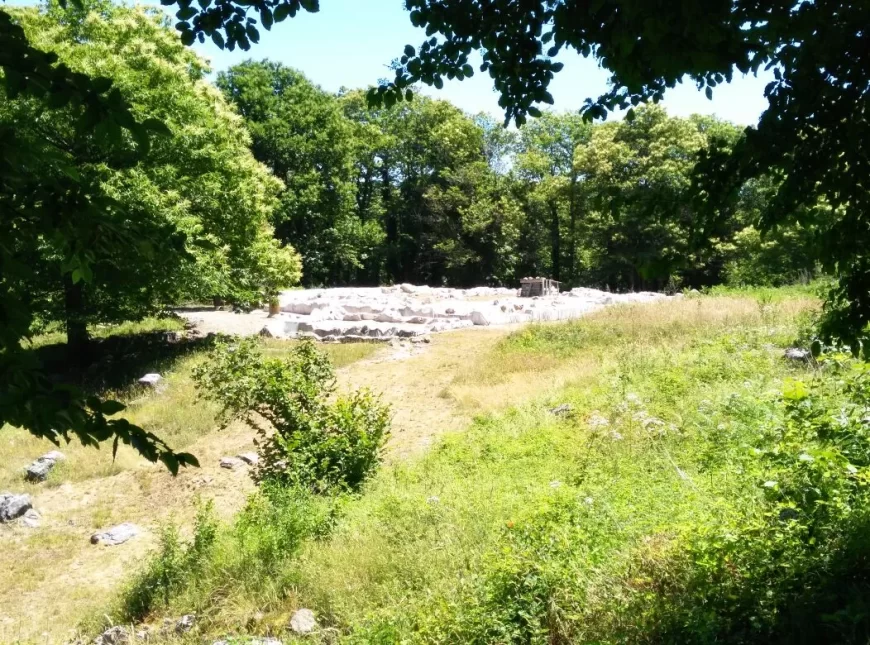
The reference to the remains of the Samnite sanctuary dedicated to Hercules, in the locality of Civitelle, is intentional.
The temple was built in a particularly strategic location, near the Pescasseroli-Candela tract and the routes leading towards the Adriatic or the Campanian side of the Matese.
It was an important place of worship for the Pentri Samnites but also a key point for trade exchanges.
The artifacts found on site confirm that these places were frequented as early as the 7th-6th centuries BC.
Visiting this archaeological area goes beyond history, as it offers the chance to immerse yourself in the lush nature of the Molisian mountains.
The WWF Oasis of Guardaregia-Campochiaro
For an even more captivating experience in nature, a visit to the WWF Oasis of Guardaregia-Campochiaro is a must.
This regional reserve is characterized by karst phenomena.
A notable feature is the Quirino Stream Canyon, with the San Nicola Waterfall. At this point, the water drops approximately one hundred meters.
Equally interesting are the Pozzo della Neve caves and Cul di Bove: these are the deepest abysses in Europe.
Naturally, the vegetation also contributes to making the landscape enchanting.
You move from forests bordering the Quirino stream to the beech forests of Monte Mutria and Campochiaro’s mountain.
The holm oak and strawberry tree are also present in this natural reserve.
Apennine Animals
The fauna is also well represented.
In addition to the Apennine wolf, this habitat is home to squirrels, roe deer, wild boars, and badgers, to name just a few species.
Looking up to the sky, you can spot golden eagles, falcons, and kites, as well as the bearded vulture.
A paradise for birdwatchers and photographers.
There are also over 300 species of butterflies. However, the true symbol of the WWF Oasis is a rarity: the glasses salamander.
In short, the opportunities for organizing a memorable excursion in the Campochiaro area are certainly abundant.
Campochiaro from Above: Paragliding
Even paragliding enthusiasts find highly interesting opportunities here.
The particular characteristics of the Matese allow for paragliding.
The take-off area is at 1,070 meters above sea level.
However, you can fly even higher, up to the majestic Monte Miletto (2050 meters above sea level) or Gallinola (1923 meters a.s.l.).
The Campochiaro flying site is recommended for all enthusiasts of this sport, even beginners.
The landing areas are considered quite safe.
If you prefer more peaceful activities, it’s better to return to walking in the green landscapes.
Still, within the territory of Campochiaro, in the Vicenne district, there are the remains of a Longobard necropolis.
In any case, the trails for trekking are numerous, as are the opportunities for horseback riding or cycling.
A Visit to the Historic Center of Campochiaro
Before leaving, it’s worth stopping in the town to visit the Church of Santa Maria delle Grazie.
Inside, there is a wooden altar in Baroque style: it is considered one of the most beautiful in Molise.
Nearby, there is also a fountain, characterized by a red stone portico with six columns.
Overlooking the town is the Angioina Tower.
Restored and open to visitors, it was the observation point of a medieval fortress with a surrounding wall.
If you’ve chosen the Molise side of the Matese to spend a few days enjoying the outdoors, be sure to include Campochiaro in your travel itinerary.
The nature, history, and its slow rhythms will capture your heart.
Photo Credits: Alessandra Capocefalo
