

In Acquaviva Collecroce, history, culture, and tradition intertwine
Imagine traveling through the hills of Lower Molise, where the land gently folds, almost hiding small treasures.
Hidden among the hills of Lower Molise, Acquaviva Collecroce is located in a privileged position between the Biferno and Trigno rivers, in an area characterized by gentle slopes and abundant water.
A village that holds an ancient soul, made of millennia-old traditions, a unique mix between Croatian and Molise cultures. A place that welcomes you with its tranquility and surprises you with its stories and legends.
Acquaviva Collecroce is one of three Molise municipalities where the Slavo-Croatian language is still spoken, a testament to a cultural heritage that dates back to the 16th century.
Here, Slavic populations came from present-day Bosnia and Herzegovina and Croatia during the period of migrations simultaneous to the Albanians, bringing with them their language and traditions that still survive today.
Village of History and Symbols
Arriving in the heart of the village, the first thing you’ll notice is the Church of Santa Maria Ester, a building constructed by the Knights of Malta in the 16th century and later reconstructed in Baroque style.
A curious detail? The church faces away from the main square, as the square was only built after its construction.
Under the bell tower, you can discover the Magic Square, an ancient and mysterious palindrome that enchants visitors with its cryptic phrase, “ROTAS OPERA TENET AREPO SATOR“, the meaning of which remains shrouded in mystery.
Village of a Thousand Fountains
Acquaviva Collecroce owes much to the abundant presence of water, which influenced both its name and the choice of its location. The fountains scattered throughout the area testify to this wealth and are an integral part of village life.
Among these are the Marmarica and Pisciariello at the lower part of the hill, the Fontana Vecchia and the Fontana Nuova higher up, and the Fontanella, which stands at the highest point of the village.
Each fountain has a story, some of them were once used for laundry or to collect domestic water with the so-called copper tubs, carried by the young women of the village. These moments of waiting at the fountain were opportunities for socialization, and often, for courtship.
The fountain was not just a practical place, but also a social gathering point. In the 1970s, a splashing fountain with three basins was built near the Piazzetta, topped by a statue depicting a man holding a flask.
This structure, along with the adjacent small fountain, still provides fresh and refreshing water today.
The Heart of Tradition: Croatian Language and Culture
The bond with Croatian language and culture is strong in Acquaviva Collecroce. Here, the štokava-ikava, a Croatian dialect still spoken today, dates back to the migration of Slavic populations in the 1600s.
This makes the village a rare and precious example of cultural preservation in Italy, where history intertwines with living traditions.
Every corner of the village tells of this past, like the Monument to the Arrival of the Croats, which celebrates the village’s origins and highlights its linguistic and historical uniqueness.
Festivals and Flavors to Discover
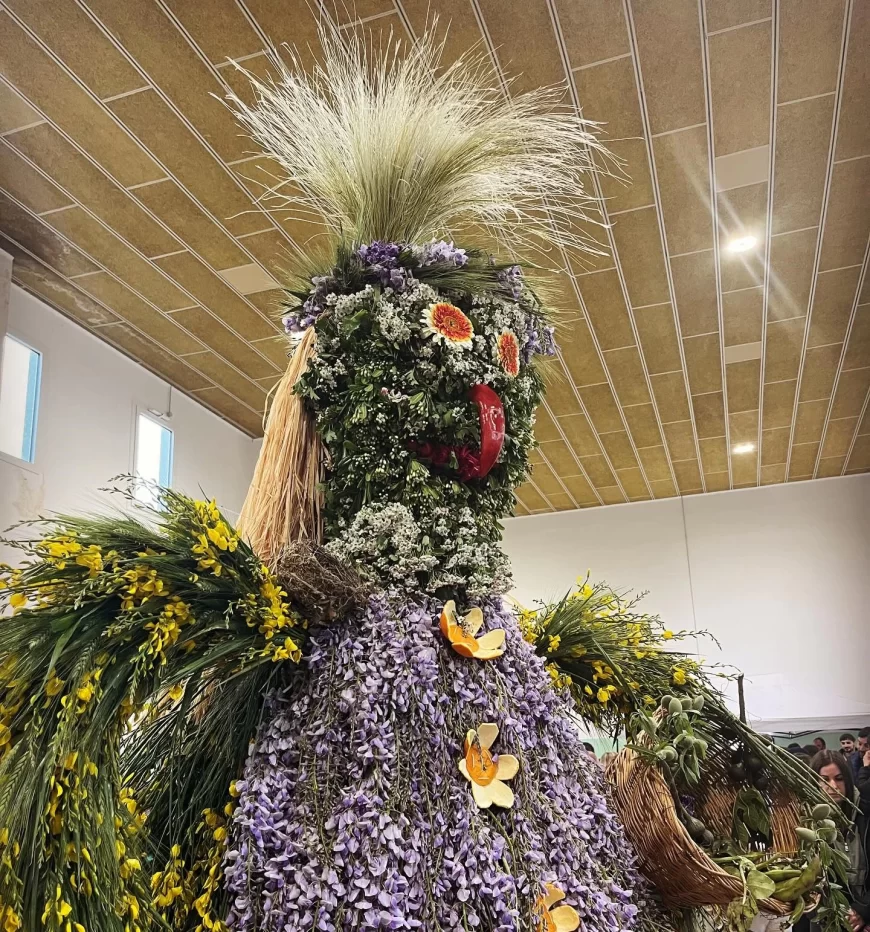
The popular traditions of Acquaviva Collecroce find their most authentic expression in its festivals, and one of the most beloved is the celebration of Maj, which takes place on May 1st. This ancient festival, symbolizing rebirth and spring fertility, features an imposing cone-shaped structure resembling a human figure, entirely covered with flowers, herbs, and fresh produce gathered from the surrounding countryside.
The “Maj” is the heart of this celebration, carefully prepared the day before, when the locals gather to collect and assemble its ornaments. On the day of the festival, folk songs echo through the streets of the village, and the famous line emerges:
“Ko je reka ka Maja nimaša dokj, jiskod vana ka ga vidiš prokj” – “Who said the Maj wouldn’t come, step outside, you’ll see him passing by”. With this song, the Maj comes to life. A man hides inside the structure and carries it through the village streets, followed by a procession of locals and visitors, accompanied by traditional dances and music.
The central square becomes the heart of the festival: fellow villagers returning from abroad and foreigners join together to celebrate, and the procession makes brief stops in front of houses, where residents offer local food and wine to the participants.
In this festive and convivial atmosphere, the Maj becomes not only a symbol of spring but also an opportunity to strengthen community bonds and celebrate the richness of the traditions that make Acquaviva Collecroce a unique and welcoming place.
Religious festivities also abound, such as those dedicated to Saint Michael the Archangel and Saint Blaise, moments when the village comes together and celebrates with local delicacies, like the Kolači, pastries filled with cooked grape must.
Among the typical dishes are the cavatelli with sausage or ventricina sauce, and the characteristic legume soup called Varak, prepared during the feast of Saint Donato.
The gastronomic tradition of Acquaviva Collecroce reflects the authenticity of the place, with genuine flavors and recipes passed down through generations.
A Village to Live Slowly
Acquaviva Collecroce is a place where the past and present coexist harmoniously.
Whether you are looking for history, culture, or simply peaceful moments immersed in nature, here you will find a village that has never lost its identity, but rather invites you to slowly discover every corner, every tradition, every fountain.
Photo credits: Associazione culturale “Naš Život” – Comune di Acquaviva Collecroce [Balconi in Fiore].
