

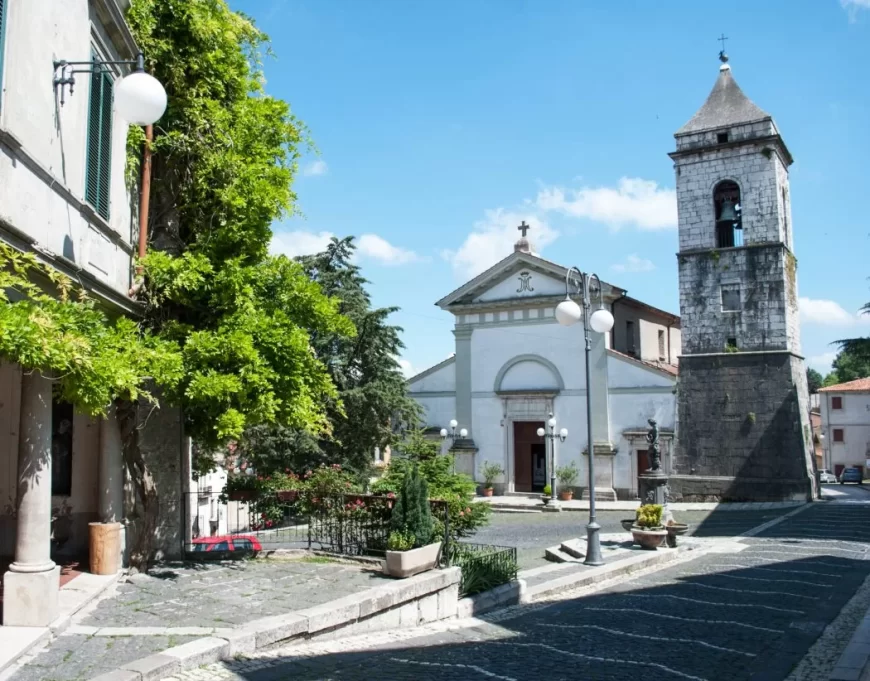
Carovilli, Fantasy atmospheres among pastures and traditions
Molise is all green, but there are areas where nature stands out even more for its beauty and lushness.
Alto Molise, with its mountains and pastures, represents its highest expression.
And Carovilli deserves, in this sense, a special mention for the magnificence of its landscape. The meadows, forests, trails, blooming valleys, and snow-covered peaks: it almost looks like a scene from a postcard.
Or from a Fantasy story populated by Fairies and Elves: the setting could be that of Narnia or The Lord of the Rings.
The clean and fresh air, the traditions preserved until today, and the excellent gastronomy make it an ideal place to spend moments of relaxation and leisure.
Truffles are one of the delicacies that food lovers will certainly appreciate, as well as dairy products of the highest quality, made from local milk.
The environmental context is not the only strength of the town in the province of Isernia. The village itself is also quite attractive and boasts particularly interesting historical and architectural elements.
This applies both to the main town and to the fractions of Castiglione, Fonte Curelli, Briccione, and Colle Savino. They are connected by a network of sturdy farmhouses, rural buildings that are still inhabited today.
A square that seems to have come out of a painter’s sketch
The heart of the historic center is represented by Piazza del Municipio, which, due to the variety of elements it contains, seems to come straight from a designer’s imagination.
Within the same square, we can find the fountain, the church, the town hall, the clock tower with the wisteria climbing up its facade, the stone staircase, and the headquarters of the old workers’ society.
The main fountain, an interesting feature, depicts the god Bacchus. Made of bronze by the French art foundry Val d’Osne, it seems to be inspired by a pre-existing work by the Dijon sculptor Mathurin Moreau. There are three other similar fountains in Molise, but Carovilli’s is the only one where the young figure holds grapevines and grapes.
The town hall also houses the Società operaia di mutuo soccorso, still active today. Founded in 1887 with the motto “Brotherhood, work, and honesty,” it has always pursued the goals of moral and material improvement and the right to education.
The remains of Saint Stephen of the Wolf watch over the town
The Mother Church, dedicated to the Assumption of Mary, was built in the 15th century and is characterized by a blend of styles ranging from the Lombard style of the 10th century to Baroque.
Notable features include the 16th-century holy water font with a sculpted serpent and the 17th-century baptismal font, which features the face of Duke D’Alessandro of Pescolanciano.
Inside, the relics and mortal remains of Saint Stephen of the Wolf, the town’s patron saint, are preserved, along with his wooden bust.
The saint, a Benedictine monk originally from Carovilli and founder of the San Pietro Apostolo Monastery in Vallebona (Manoppello), according to the hagiography, miraculously tamed a fierce wolf in the area of Manoppello.
A smaller church dedicated to the protector of Carovilli is also located on a tratturo that connects the main ones, Celano – Foggia and Castel di Sangro-Lucera.
This place of worship is open to the faithful only on certain occasions, such as the traditional “Tresca” ritual.
Excursions for everyone in the Mab Reserve of Montedimezzo
The territory of the Altomolisano municipality falls within the area of the Collemeluccio-Montedimezzo Mab Reserve.
It is an area of over 25,000 hectares of wooded land that adheres to the UNESCO Man and the Biosphere program for the protection of natural ecosystems, environmental sustainability, and safeguarding cultural identity.
Here, you can do all kinds of excursions, on foot, by bike, or on horseback, with varying levels of difficulty.
In the Carovilli area, one of the most popular trails is the Monte Pizzi Loop. It is a trail suitable for everyone, starting from the Cerreto fraction. On foot, it takes about two and a half hours, while by bike, it takes just over an hour.
Along the route, you can admire various scenic points of interest, including the Celano Foggia tratturo and the Staffoli plateau.
Monte Pizzi is, of course, just one of the many trails that can be explored while stopping in the mountain town.
Another possible trail leads from the town center to Monte Ferrante, which dominates the town.
As you venture into the black pine forest, you’ll discover the remains of Samnite walls; from the top, you can enjoy a magnificent panoramic view of the surrounding mountains and the village below.
The “Tresca”: traditions that survive through time
The beautiful Altomolisano town can boast several traditions that have survived, more or less unchanged, to this day.
One of these is the “Tresca” (threshing), which takes place every year on the penultimate Sunday of August, in the field behind the Church of San Domenico.
At sunrise, the threshers untie the sheaves and scatter the spikes on the ground, over which horses are driven to separate the grain from the husks without breaking the grains.
Armed with pitchforks, the threshers toss the straw into the air, which is carried away by the wind, leaving only the grain on the ground. The entire process is repeated several times, accompanied by chants from the crowd and the sound of accordion music.
Once gathered, the grain is sifted and stored in sacks, which are then sold at auction in the afternoon. The proceeds will go towards organizing the Madonna Incoronata festival, which takes place in April.
Halloween? Better the “Mort’ cazzuta”
But the “Tresca” is not just that. Alongside the representation of the ancient threshing, there is also a celebration. Music, dancing, games for children, and, most importantly, typical local dishes.
The “Mort’ cazzuta” is a tradition that comes from the past and, in some ways, is connected to what Halloween represents for Anglo-Saxon culture. Even though it takes place a day later.
On the night between November 1st and 2nd, during the Festa dei Morti, Carovilli prepares to welcome its deceased, who can only return to the world of the living on this date.
Pumpkins are carved (hence the term “cazzuta”) into human faces, and candles are placed inside. These special lanterns are then placed outside homes, on window sills.
Next to the pumpkin, each family leaves a plate of “sagne e jierve,” the typical fresh pasta with vegetables that is part of Carovilli’s culinary tradition.
The deceased can then refresh themselves and find their way home thanks to the light of the candles, whose role is also to ward off any ‘thieves’ who might try to steal the food.
Photo credits: Fattodavoi
