


Time Travel: Colletorto in the Age of the Angioini
Walking through the alleys of villages, it’s easy to make time leaps, even several centuries back, just by carefully observing the buildings, stones, details, and decorations. It’s even easier when the traces are clearly visible, and in fact, they rise high in the sky, like in the case of the Angioini tower of Colletorto. And when a historical reenactment of a specific period is added, everything becomes much simpler and clearer.
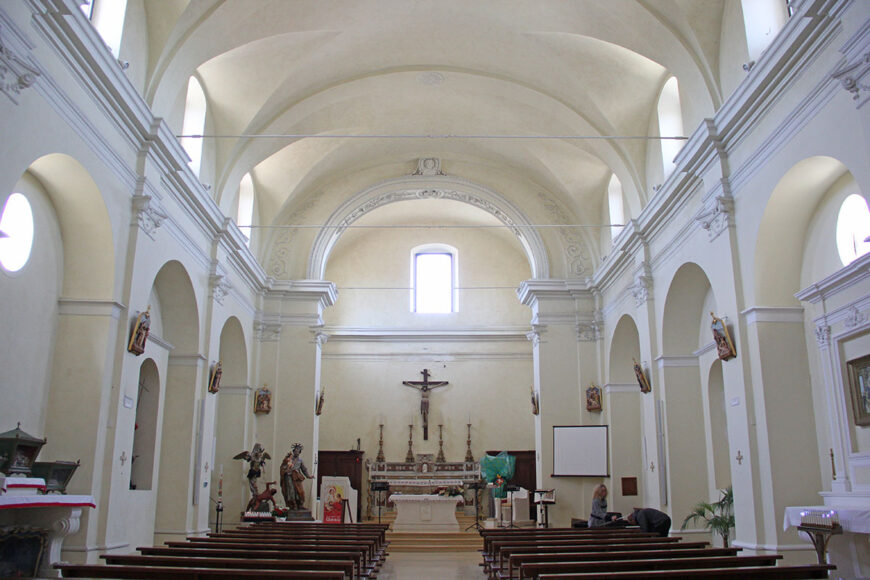
In the village, there are many references to the past, just by looking at the churches and buildings. From the center of the village, two towers stand out over the town and the surrounding countryside: one is the bell tower of the Church of San Giovanni Battista, and the other is the already mentioned Angioini tower. The first one has a special feature. The church has two entrances, one on the side from the alley next to the building and one at the front from the square. However, it is the bell tower that faces the square, and that’s how you can access the church by passing right through it.
As for the tower, in addition to being a building that characterizes the skyline of Colletorto, it also refers to the most prosperous period, the Angioini era.

A Rich Past
The village has relatively recent origins. The first official records date back to 1320, when it was called Collis Tortus. Of the families that held the land, the first and certainly the most prestigious, to whom the inhabitants still honor, are the d’Angiò. The tower, built during this period and placed to guard the town’s walls, bears the insignia of Queen Joanna I of Anjou.
However, there is more to see than just the tower and the church in front of it. Other sacred buildings include the Church of Purgatory and the Monastery of Sant’Alfonso dei Liguori, from where a historical procession in honor of the Queen takes place every mid-August.
Reliving the Angioini Period
The attachment and sentiment towards Queen Joanna I is so great that since the 1990s, for two nights in mid-August (11th and 13th), the “Notti Angioine” take place. This historical reenactment includes parades in period costumes, lotteries, crossbow tournaments, the goose race, and, to conclude in grand style, after the grand parade, the castle fire at the stroke of midnight.
It’s another way to experience a village and its deep attachment to history.
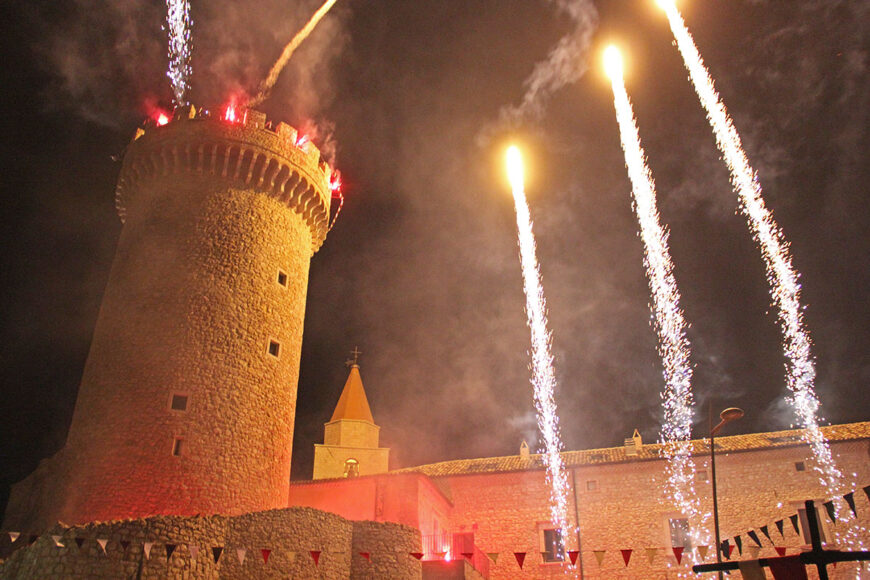
Photo Credits: Paolo Pasquale – TurismoinMolise
